Table of Contents
ToggleiLovePDF ranks first for major PDF tool searches with almost no visible page content because its rankings depend on user intent match, more than a decade of backlink authority, branded search volume, and fast load speed, not on-page word count or keyword density.
Most SEO guidance treats content depth as a ranking requirement, yet iLovePDF’s tool pages carry almost no body copy across the entire catalog. The sections below break down each factor driving these rankings, followed by a practical structure smaller sites can use to build the same trust signals from a much smaller starting point.
What Is iLovePDF

iLovePDF is a free, web-based platform for editing, converting, and managing PDF files, offering tools such as merge, split, compress, and PDF-to-Word conversion.
Founded in Barcelona in 2010, the platform has grown into one of the most visited PDF tool sites in the world, serving millions of users across 25 languages, with apps for desktop, mobile, and a REST API for developers.
What a Typical iLovePDF Tool Page Actually Contains
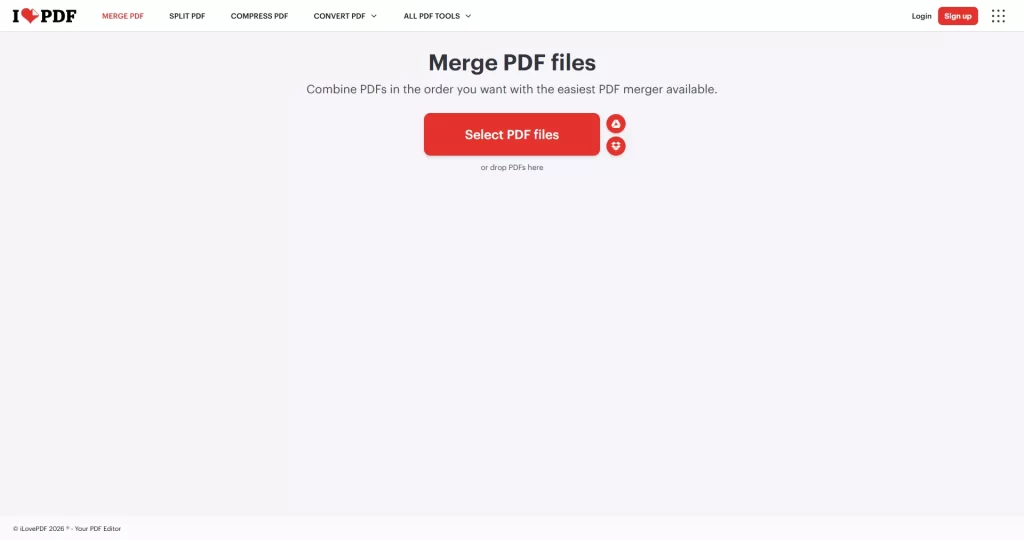
A typical iLovePDF tool page contains a heading naming the tool, a drag-and-drop upload area, and at most one line of instruction, with no long-form guide, tutorial, or FAQ block.
This minimal structure holds across the entire catalog. Compress PDF, Split PDF, PDF to Word, and dozens of other tools follow the identical pattern, which rules out word count or topical depth as the explanation for these rankings.
User Behavior Signals: Task Completion and Bounce Patterns

User behavior signals in iLovePDF’s favor come down to fast task completion and a low rate of visitors returning to search results after their visit.
Someone searching “merge pdf online” wants to upload two files, click merge, and download the result in under a minute, and iLovePDF’s page structure matches that intent almost exactly. Because the tool works instantly, most visitors finish their task without going back to try another result.
A caveat matters here. Google’s own representatives have said publicly that raw bounce rate isn’t used as a direct ranking signal. Broader engagement patterns, such as whether users return to search after clicking through, sometimes called pogo-sticking, or how quickly a query gets marked resolved, likely play the actual role. This section is a well-supported theory, not a confirmed formula, since Google keeps its exact signals private.
Usage Volume and Repeat, Direct Traffic as Trust Signals
High usage volume and repeat, direct traffic function as trust signals because millions of returning users searching the brand name directly, instead of a generic query, tell search engines the destination is already trusted.
People who merge PDFs regularly for work often skip the search step and type “ilovepdf” straight into the address bar. This branded search volume compounds over time, reinforcing the site’s authority independently of what’s written on any single page.
Social and Brand Signals

Social and brand signals come from unlinked mentions of iLovePDF across tech blogs, forums, and roundup articles, which search engines can weigh as recognition independent of backlinks.
Search “best free pdf tools” and iLovePDF shows up in Reddit threads, Stack Overflow answers, and blog roundups, often named directly rather than described generically. This kind of organic mention differs from a link earned through outreach, since it reflects recognition built over years of being useful.
Domain Authority and Backlink Scale
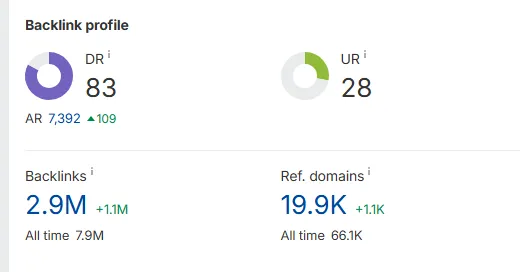
Domain authority and backlink scale explain a large share of iLovePDF’s ranking strength, built from more than a decade of links from universities, government portals, and tech blogs.
The site has accumulated links from sources recommending its tools to their own readers throughout that time. Each link functions as a vote of confidence passed to every page across the site, including ones with almost no text. This is the piece hardest for newer sites to replicate, since authority built over ten-plus years doesn’t transfer through better copywriting alone.
Programmatic Architecture Across the Tool Catalog
Programmatic architecture means iLovePDF built a dedicated landing page for every tool and every file conversion pair, each targeting its own specific search query instead of competing against sibling pages for the same broad term.
Multiply that structure across 25 languages, each with localized URLs and metadata, and the addressable search traffic becomes enormous. A user searching in Spanish, French, or Japanese finds a page built specifically for that language, not a translated afterthought.
Core Web Vitals and Load Speed
Core Web Vitals and load speed favor iLovePDF because minimal page weight lets every tool load almost instantly across devices and networks.
Google has weighted page speed into its ranking systems for years, and a near-empty page has a natural advantage here simply because there is less to load. This factor alone would not carry a page to the top of competitive results, but paired with strong intent match and fast task completion, it compounds the advantage rather than acting on its own.
What This Means If You Don't Have iLovePDF's Authority
Sites without iLovePDF’s decade of backlinks, branded search volume, and word-of-mouth recognition need content and structure to do the work those trust signals haven’t earned yet.
None of this means content doesn’t matter. It means content matters differently depending on how much trust a site has already banked. Here’s what building that substitute signal looks like in practice.
Cover the Topic, Not Just the Keyword
Covering the topic means grouping related pages into clusters and covering the surrounding entities and subtopics a real expert would mention, instead of targeting one keyword on one isolated page.
This gives search engines a fuller picture of a site’s scope, closer to how modern search systems build an understanding of a brand’s expertise, sometimes described as knowledge graph coverage.
Build a Clean, Crawlable Hierarchy
A clean, crawlable hierarchy organizes content into clear hubs and categories with logical internal linking between related pages.
This structure helps search engines understand how topics connect and helps users find what they came for without extra clicks, while a confusing structure slows both crawlers and visitors down.
Make the Product Worth Talking About
The product has to work well before any content or outreach strategy can succeed, since strategy amplifies a good product but rarely rescues a weak one.
None of the signals covered in this section hold up if users bounce off a tool that doesn’t solve their problem.
Target Long-Tail, Bottom-of-Funnel Terms First
New sites should target long-tail, bottom-of-funnel terms first, while reserving head terms like “merge pdf online” for the main tool page itself.
The long-tail opportunity sits in the layers built around that page. Instead of trying to outrank an established competitor on the head term right away, a new site can build a support structure underneath it:
- Workflow landing pages built around a narrower, related use case. A page like “How to Merge PDF Files for Student Assignments” targets a long-tail, navigational-intent keyword with far less competition, and it points visitors straight to the same tool.
- Blog articles published on the tool’s own blog, answering the real questions that audience searches for, such as how to combine lecture notes into one file before an exam. These target low-competition, long-tail keywords that would never survive a fight for the head term, and they capture visitors earlier in their search before linking back up to the workflow page and the tool itself.
This layered structure, head-term tool page on top, long-tail landing pages and articles feeding into it from below, gives a new site several realistic entry points instead of one uphill fight against a competitor with a decade-long head start.
Manufacture the Same User Signals Incumbents Already Have
New sites need to deliberately generate the same user signals incumbents already have banked: bounce rate, time on page, task completion, and return visits.
Google has no way to know a tool is better than its competitors if nobody is using it and generating that behavioral data. Long-tail landing pages act as the on-ramp, bringing in the first real users whose behavior starts building the exact trust signals an established competitor earned years ago.
Let the Internet Know the Tool Exists
Getting the internet to recognize a new tool’s capabilities requires visibility beyond organic search, through directories, community answers, and mentions on industry blogs.
Getting listed in relevant directories, answering questions in communities where the target audience already spends time, and earning mentions on industry blogs feed into the same authority and brand-signal loop that already works in iLovePDF’s favor, just built deliberately instead of over a decade of default recognition.
Consultants who’ve spent over 10 years auditing sites across different industries tend to see this pattern repeat. Authority and content depth trade off against each other. The less trust a domain has already banked, the more deliberate its content, structure, and early traffic strategy need to be to earn it.
Frequently Asked Questions
Does this mean content-heavy pages don't rank well?
No. Content-heavy pages still rank well, especially for sites without an established authority base. iLovePDF’s approach works because of trust signals built over more than a decade, not because thin content is inherently favored. The distinction that matters is fluff versus substance. Comprehensive content should still stay direct and answer the question fast, since padding a page with filler to hit a word count hurts the reader as much as it hurts rankings.
Can a new site skip content and rely on UX alone?
Unlikely to work the same way. A new site lacks the backlink profile, branded search volume, and behavioral trust that let iLovePDF’s minimal pages perform. Content remains the more reliable lever for sites still building authority.
Does Google actually use bounce rate as a ranking factor?
Google has stated that raw bounce rate isn’t a direct ranking signal. Broader engagement patterns, such as whether users return to search results after clicking through, likely play a role instead, though the exact mechanics aren’t public.
What should smaller sites take from this case?
Focus on intent match, page speed, and building genuine backlinks and mentions over time. Content depth should fill the trust gap until those other signals catch up.
About the Author

Ashan Kusalanka
SEO Consultant with 10+ years of experience helping local and global businesses strengthen their digital presence. I design strategies that improve visibility, build authority, and drive sustainable growth.