Table of Contents
ToggleGoogle made an early move against FAQ rich results back in August 2023, narrowing them to a small group of well-known government and health websites. Most businesses had already lost the visual accordion dropdown under their search listings by that point, whether they realized it or not. On May 7, 2026, Google finished the job. The feature disappeared from Search entirely, for every site, with no rich snippet exception left standing.
The timing sparked a familiar reaction across the SEO community. Some declared FAQ schema dead on arrival. Others treated the news as confirmation that FAQs no longer mattered at all, so why bother writing them? Both reactions miss what actually happened.
A rich result is a display feature. It controls how a search listing looks on the page. FAQ content itself is something else entirely, a way of answering real questions a visitor has before, during, or after reading a page.
Losing the dropdown changes how a page appears in Google Search. It does not change whether the underlying content still helps a reader, still supports a knowledge graph, or still gets pulled into an AI-generated answer.
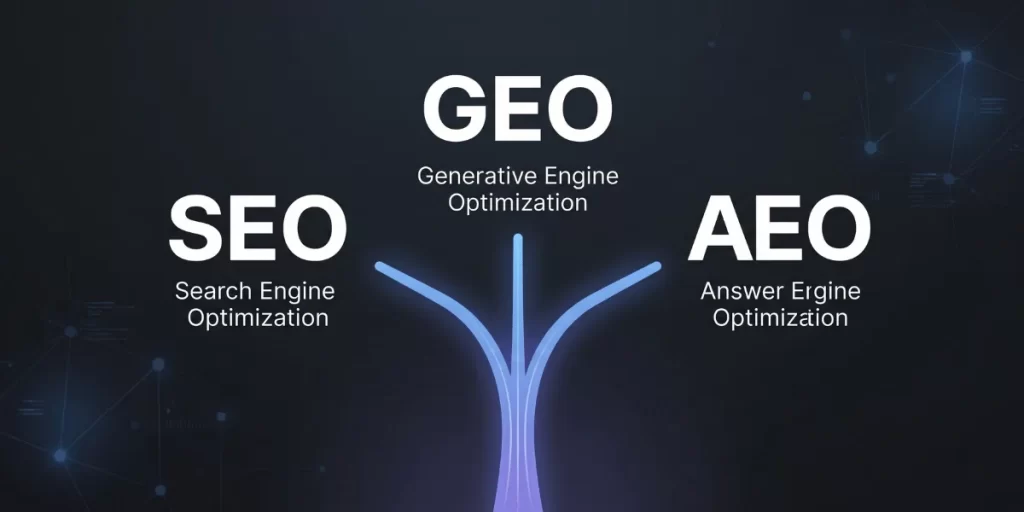
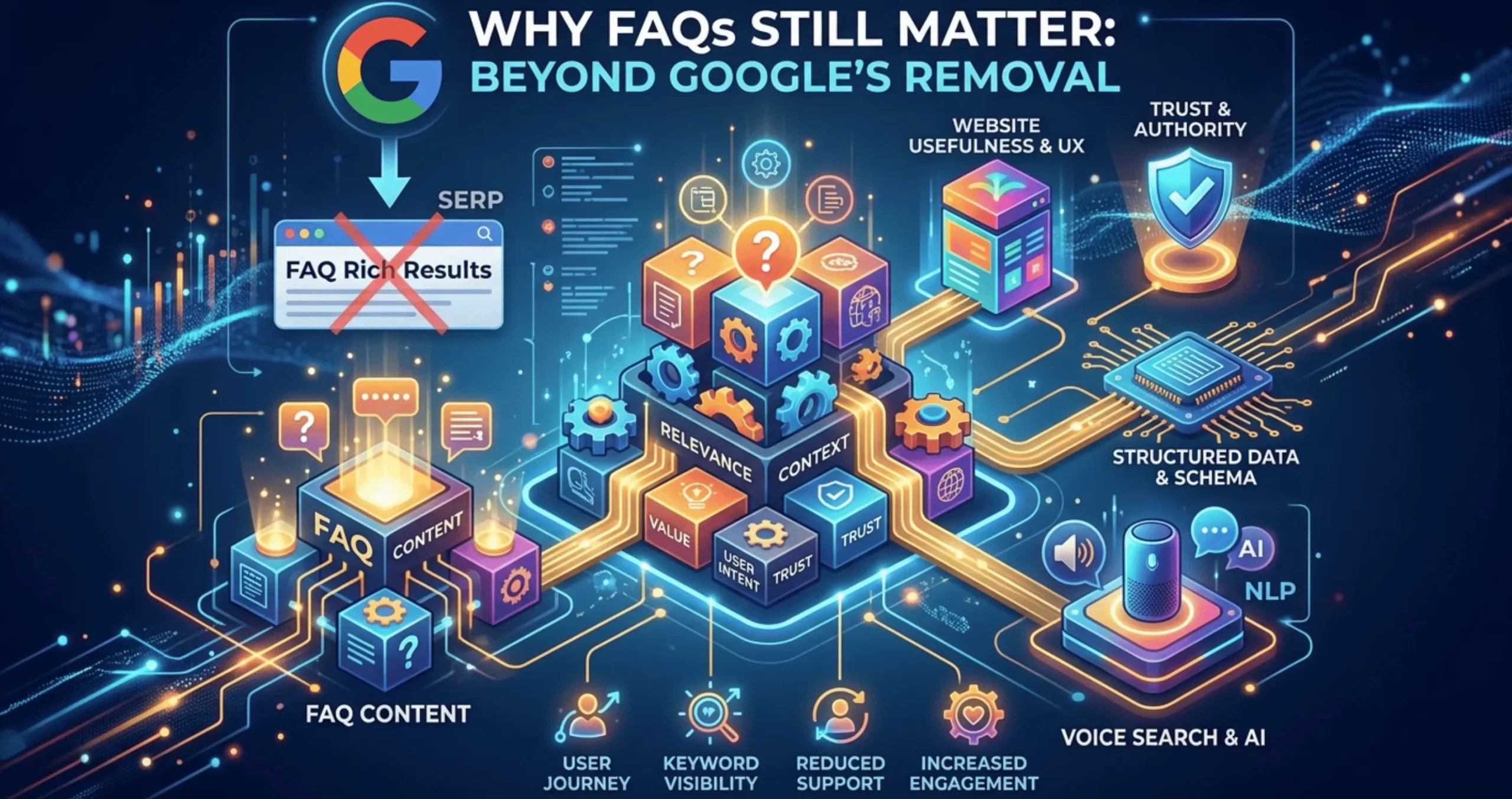
That distinction is the whole point of this article. FAQs stopped being a shortcut for extra screen space years ago, long before the May 2026 announcement made it official. What they became instead is a tool for semantic SEO, entity building, and AI discovery, three things that matter more in 2026 than an expandable dropdown ever did.
What Is FAQ Schema, and What Was It For?
Before getting into what changed, it helps to be clear about what FAQ schema actually is, since the term gets thrown around a lot without much explanation.
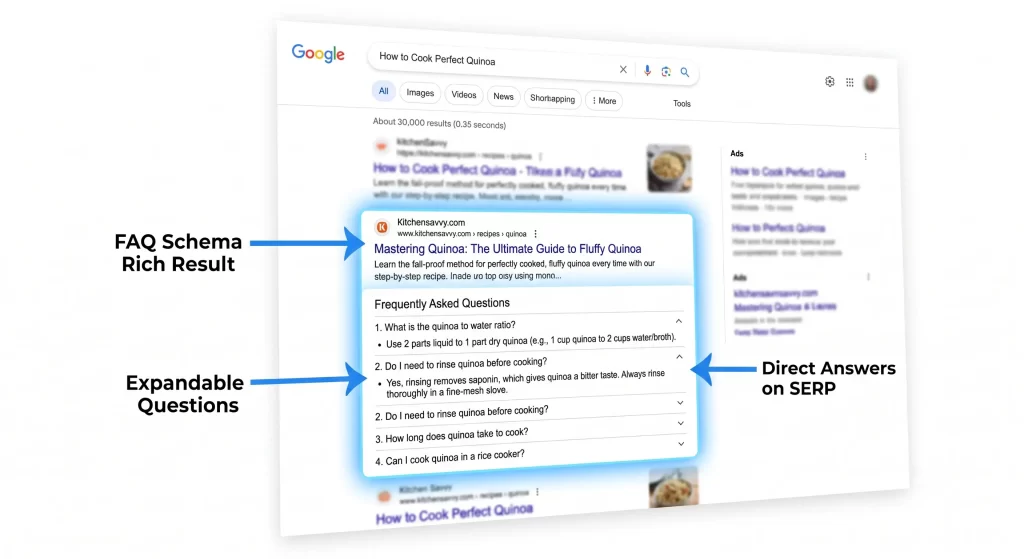
FAQ schema, technically called FAQPage structured data, is a small block of code added to a page’s backend. It does not change anything a visitor sees. Instead, it labels each question and its matching answer in a format search engines can read directly, using a structure called JSON-LD. In plain terms, it is a way of telling Google, “this exact sentence is a question, and this exact sentence right after it is the answer.”
For years, that label served two purposes. It helped Google understand the page’s content more precisely, and if the page qualified, it let Google display those questions as an expandable dropdown directly under the search listing, without the visitor needing to click through first. That second part, the visible dropdown, is the FAQ rich result. It is what most people mean when they talk about “FAQ schema working” or “FAQ rich results.”
The schema and the rich result are two different things, even though they got treated as one and the same for years. The schema is the code. The rich result is the visual reward Google used to give for having that code in place. That distinction matters for everything that follows.
What Actually Changed, and Why
The deprecation notice appeared quietly, added to the top of Google’s FAQ structured data documentation rather than announced through a dedicated blog post. It laid out three stages. FAQ rich results stopped showing in Search on May 7, 2026. Search Console will remove its FAQ search-appearance filter, rich result report, and Rich Results Test support in June 2026. Search Console API access to FAQ rich result data ends in August 2026.
None of that touches the FAQPage schema itself. The markup remains a valid schema.org type. Adding it to a page will not throw errors, trigger a manual action, or hurt rankings. What changed is narrower than most headlines suggested: the visual dropdown is gone, and the reporting tools built around it are being retired on a set schedule.
Google has been fairly clear about why this started, even if the final 2026 step came without a fresh explanation. Back in August 2023, Google’s own Search Central blog announced the first restriction, limiting FAQ rich results to well-known, authoritative government and health websites. That post pointed to widespread abuse as the reason.
Sites had been adding artificial FAQ blocks purely to inflate their visible space on the search results page, often with questions that had little to do with what a searcher actually wanted to know. The rich result had turned into a shortcut for extra screen space rather than a genuine signal of useful content, so Google narrowed who could use it.
The May 2026 removal completes that process, but Google did not publish a fresh explanation for closing the loop entirely. The most reasonable read connects it to the same pattern: a feature that gets exploited widely enough eventually gets pulled rather than policed case by case. It likely did not help that FAQ rich results and AI Overviews had started appearing on the same search results page, giving readers two separate places to get an answer without visiting a website at all. That is an inference worth stating plainly as one, not a confirmed fact from Google.
Whatever the exact mix of reasons, the practical takeaway holds regardless: stop treating FAQ schema as a ranking lever, and start treating FAQ content as something that needs to earn its place on the page for other reasons.
Entities and the Knowledge Graph
Google organizes what it knows about the web as a network of entities and the relationships between them. A business, a product, a service, and a location are all entities. FAQs are one of the clearest ways to define the attributes that connect an entity to the questions people actually have about it.
Take a simple example. If the entity is “organic coffee,” a question like “does organic coffee have less caffeine” ties that entity to a specific attribute. Answer it clearly, and the page becomes another data point Google can use to understand what organic coffee is, what people want to know about it, and how confidently this particular page speaks to that topic.
This is where FAQs do quiet work that has nothing to do with a search snippet. They act as connective tissue, linking a brand or product entity to the practical, sometimes messy questions real customers bring to it. A page that answers those questions well signals topical depth. That depth does not just help the FAQ section. It tends to lift how Google understands and ranks the rest of the page, and sometimes the rest of the site, because the entity relationships get reinforced page after page.
Long-Tail Keywords and People Also Ask
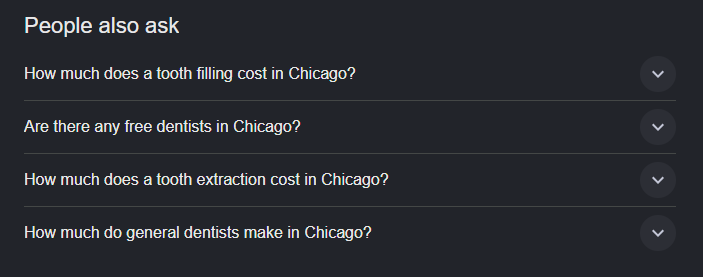
FAQ sections remain one of the easiest places to work in long-tail search phrases without forcing them into a headline or a product description. A phrase like “teeth whitening cost in Chicago” carries the searcher’s intent, a location, and a specific service all in one line. Trying to build an entire landing page around that exact phrase gets awkward fast. Slotting it in as an FAQ question, followed by a direct answer, feels natural because that is close to how someone would actually ask it.
People Also Ask boxes are a separate system from the rich result dropdown that Google retired, and they are still active. Well-structured FAQ content remains one of the strongest sources PAA pulls from. Answering a question clearly and concisely, in the same phrasing a searcher might use, keeps a page in the running for that box even with the old accordion display gone from the picture entirely.
The AI Frontier: AI Overviews, ChatGPT, Perplexity, and Gemini
Large language models extract information differently than traditional search crawlers. They tend to favor content that already looks like an answer to a specific question, because that structure mirrors the question the model is trying to resolve for its own user. A clean, direct FAQ entry is one of the easier formats for these systems to lift and cite, schema or no schema.
That last part matters. AI systems do not appear to give FAQPage markup any special weight when deciding what to cite. They pull from clearly written question-and-answer content whether the JSON-LD is present or not. The schema can still help a crawler parse the page faster and with more confidence, but the visible writing is what earns the citation.
There is a trade-off worth naming honestly. A well-answered FAQ might satisfy a reader on the AI Overview itself, meaning they never click through to the site at all. That is a real cost. But being named as the source behind an AI-generated answer still carries brand visibility and a trust signal that a buried, unclicked result does not. For many businesses, especially service providers and SaaS companies building authority in a niche, that exposure is worth more than a single lost click.
User Experience and Product Depth
A landing page or article cannot answer every question a reader might have without becoming cluttered and hard to follow. FAQs give that overflow somewhere useful to go. A SaaS product page, for instance, cannot list every minor feature or edge case in the main copy without burying the core value proposition. A dedicated FAQ section handles that detail without dragging down the rest of the page.
Well-placed FAQs also reduce what might be called micro-objections, the small doubts that stop someone from converting even after they like what they read. Shipping timelines, refund policies, compatibility questions, and pricing edge cases are the kind of thing a visitor often searches for right before deciding to buy or bounce. Addressing them on the page instead of forcing a return trip to Google reduces the odds of losing that visitor to a competitor’s search result instead.
There is a secondary benefit here too. FAQ sections are a natural, low-friction place to drop internal links toward related hub or service pages, without it reading like a forced call to action buried mid-paragraph.
Voice Search and Conversational Queries
Voice assistants and conversational AI tools have pushed more search behavior toward full questions rather than clipped keyword phrases. Someone typing into a search bar might type “chicago teeth whitening cost.” Someone speaking to an assistant is more likely to ask “how much does teeth whitening cost in Chicago.” FAQ content, written in natural question form, already matches that second pattern without any extra effort.
Google no longer rewards that phrasing with a dedicated rich result, but the underlying match between how people speak and how FAQs are written has not gone anywhere. If anything, the growing use of conversational AI tools makes that phrasing more relevant, not less.
What To Do With FAQs Now
The practical guidance here is simpler than the deprecation announcement made it feel.
- Leave FAQPage schema in place if it still accurately describes real content on the page. Google has stated that unused or inactive structured data does not cause ranking problems.
- Remove or rewrite FAQ schema that describes content the page no longer contains, or that was only added to chase rich result eligibility in the first place.
- Write FAQ answers for the person reading them, not for a crawler trying to match a schema field. Quality and clarity carry more weight now than they did when a rich result offered a shortcut around them.
- Decide FAQ placement based on the page’s purpose. A short FAQ block near the bottom of a service or product page works well for addressing conversion objections. A dedicated, longer FAQ page makes more sense for topics broad enough to need dozens of questions, since that format supports deeper topical coverage without overloading a single landing page.
- Keep answers grounded in real customer questions rather than padding the section with filler questions nobody actually asks. Thin, repetitive FAQ blocks were part of what triggered this deprecation in the first place, and that pattern is just as unhelpful in an AI-driven search landscape.
None of this requires a full rebuild of an existing content strategy. It mostly requires shifting the reason FAQs get written, from chasing a now-retired display feature to actually supporting how both Google and AI systems understand a page.
The Real Shift Behind This Update
FAQ rich results were never the actual value. They were a visible reward for content that, at its best, was already doing something useful: answering real questions clearly enough that both humans and machines could follow it. That reward is gone now, but the underlying work has not lost its purpose. If anything, it moved to a bigger stage, one that includes AI Overviews, chat-based assistants, and a knowledge graph that rewards clarity over keyword density.
Worth checking on an existing site: are the FAQs there answering what people are actually asking today, or are they still built around exact-match keywords and eligibility rules from years ago? That question is a reasonable place to start.
Further Reading
About the Author

Ashan Kusalanka
SEO Consultant with 10+ years of experience helping local and global businesses strengthen their digital presence. I design strategies that improve visibility, build authority, and drive sustainable growth.