Table of Contents
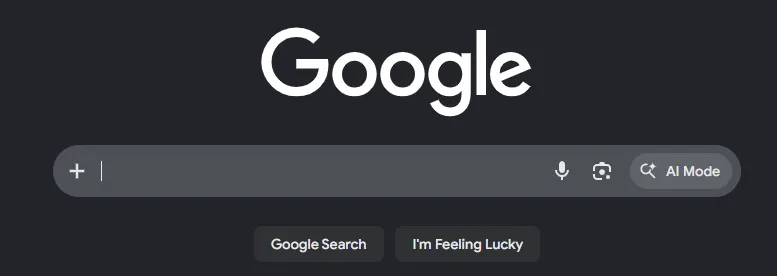
ToggleThe search bar has looked the same since 1998. One blinking cursor. A white box. Type a few keywords, hit enter, and get your ten blue links.
That era is over.
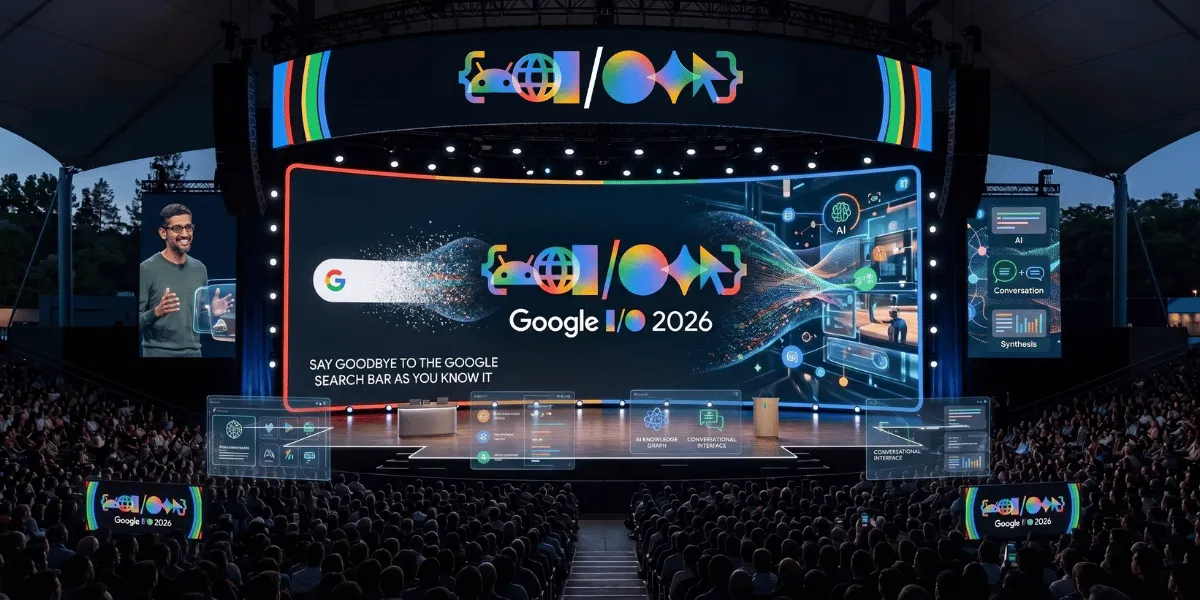
At Google I/O 2026 on May 19th, Google announced the most significant overhaul of Search in over 25 years. The classic single-line keyword box is being replaced with an “Intelligent Search Box” powered by Gemini 3.5 Flash. It accepts text, images, videos, files, and full conversational prompts. No more keyword compression. No more fragmented queries. Google now wants you to talk to it the way you would talk to a person.
With that shift comes a wave of questions from the SEO world.
Is SEO finished? Do keywords still matter? What happens to link building? And where do brands fit into all of this?
I’ve been in SEO for over 10 years. Here is my honest take.
What Google Actually Changed
Before getting into the SEO implications, it helps to understand the scale of what was announced.
This is not just a visual refresh. It’s a structural rebuild. Google made four major announcements at I/O 2026 that directly affect how Search works:
- The Intelligent Search Box. The new box expands dynamically as you type. Head of Google Search Liz Reid described the goal simply: stop training people to compress their thoughts into keyword fragments. You can now type in full sentences, drop in an image, upload a file, or share an active browser tab.
- Information Agents. Background AI processes that monitor the web for you, 24/7. You tell Search to track apartment listings, a product restock, or developments in a market. Google pushes you a synthesised update when something changes. You don’t search again. The agent handles it.
- Custom Dashboards and Mini-Apps. For paid Google AI Pro and Ultra subscribers, Search now builds interactive dashboards inside the results page for complex tasks. Fitness tracking, event planning, local market monitoring — all generated dynamically from your query.
- Gemini Spark. An always-on personal agent that handles multi-step tasks across bookings, shopping, and Google Workspace. Rolling out in preview next week for top-tier subscribers.
This is not a redesign. This is a new product sitting where Search used to be.
Does SEO Die?
No. But the version of SEO that ran on manipulation is gone.
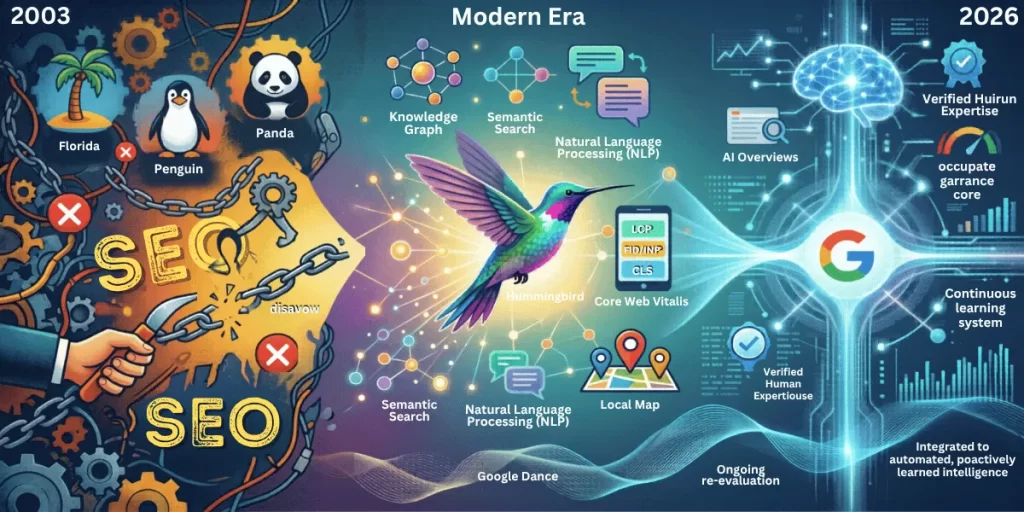
For experienced SEOs who have been paying attention, none of this should come as a shock. Google has been moving in this direction for years, gradually, through update after update, from Panda and Penguin through to Helpful Content and beyond. What changed at I/O 2026 is the speed.
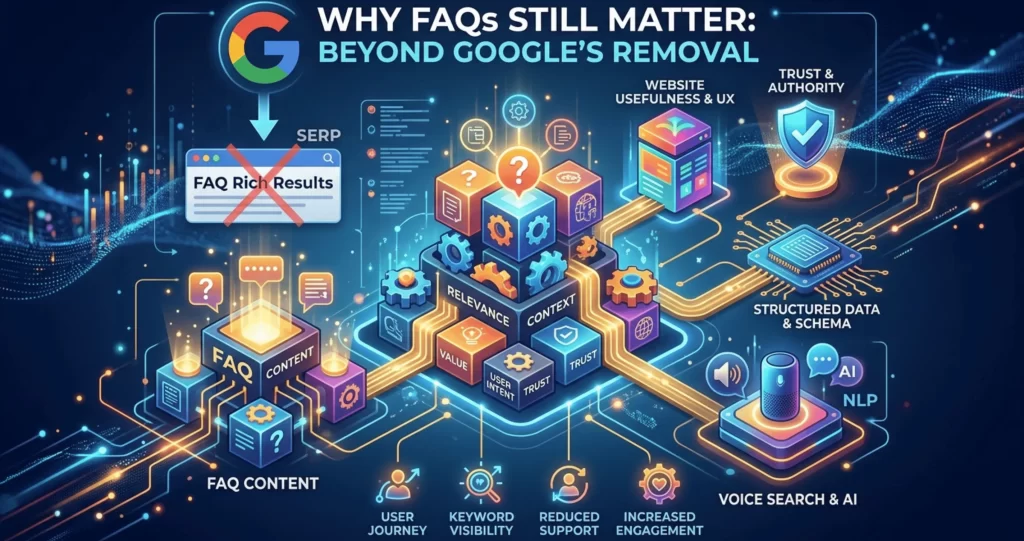
The old playbook is finished. Stuffing pages with exact-match keywords, bolting FAQ schema onto thin content to grab SERP features, building stacks of low-quality backlinks to inflate domain authority numbers, none of that survives in an environment where Google’s AI reads intent rather than matches strings.
What survives is what should have been the focus all along: content that actually helps people. Specific, resourceful, user-focused material that answers real questions in full. Content that earns its position because it’s the most useful thing available on a topic, not because it hits the right keyword density.
SEO isn’t dying. It’s becoming what it was always supposed to be.
You can’t shortcut your way to authority anymore. You have to build it. For anyone who has been doing this work seriously, that’s not a threat. It’s the right direction.
Does Link Building Still Matter?
Yes. But the approach that dominated the last decade no longer works.
Cold outreach to high-DA sites that haven’t published in two years. Directory submissions. Link exchanges dressed up as guest posts. These tactics have been losing value for a while. Now, with AI Mode replacing the traditional results page entirely, where you’re either cited in the AI response or completely absent, the nature of authority has shifted further.
What matters now is whether AI systems trust your content enough to reference it.
That trust isn’t built through outreach. It comes from:
- Publishing quality content consistently across multiple platforms
- Earning natural shares, brand mentions, and citations from relevant sources
- Appearing in community discussions, roundups, and industry conversations
- Building the kind of entity recognition that tells Google this brand is real and credible
A link from an active, relevant source still carries weight. The difference is how you get there. You earn it by producing content worth referencing, not by asking someone for a favour.
The shift is from link acquisition to authority building. The outcome can look similar on a backlink report. The process is completely different.
Do Exact Keywords Still Matter?
Exact keywords as a primary targeting strategy are fading fast.
When Google’s AI parses natural language intent, ranking for the precise string “best plumber London” becomes far less useful than being the most authoritative, entity-rich resource on plumbing services in London. The AI understands context, follow-up questions, and multimodal inputs. It’s not matching strings anymore.
The focus needs to shift to:
- Topical maps – covering a subject with depth across interconnected content, not isolated keyword pages
- Entity relationships – what people, places, products, and services does your content connect?
- Search intent – what problem is the person trying to solve, and what stage are they at?
- Knowledge graphs – how well does Google understand what your site is actually about?
That doesn’t make keyword research worthless. Understanding what people look for, at what volume, and with what intent still guides what content to create. But if your strategy is built around hitting exact-match phrases in title tags and H1s, you’re optimising for a version of Google that is being retired.
Local SEO is the one exception worth understanding
Geographic and service-based keywords still carry real weight in local search. When someone types “dentist in Dubai” or “accountant in London,” that location and service intent is explicit. Google still needs those signals to serve the right local result. The keyword itself still matters here.
But the keyword is just the entry point. What sits beneath it matters more.
Google needs to understand your business as a verified, well-defined entity. That means your name, location, category, and service associations all need to be consistent and clear across every platform you appear on. The stronger Google’s understanding of what your business is, who it serves, and where it operates, the more confidently it places you in front of the right searches.
Intent plays an equally important role. Local search intent is highly specific. Someone searching “emergency plumber Melbourne” is in a completely different mindset to someone searching “how plumbing systems work.” Google reads that transactional, location-tied intent and rewards businesses that are structured, positioned, and trusted to fulfil it. Matching the intent, not just the keyword, is what drives visibility.
What separates the top of a competitive local pack from everyone else targeting the same keyword comes down to trust, engagement, and active brand presence:
- Review quality and sentiment, not just star ratings, but the actual language people use
- Google Business Profile activity, response rates, photos, and posting consistency
- Local engagement signals such as calls, direction requests, and clicks from the listing
- Citations and mentions across local directories, community sites, and local press
- NAP consistency and entity signals across all platforms
The businesses dominating competitive local markets are not just well-optimised. They are well-understood by Google as real, active, trusted entities that match what local searchers actually need. That shift mirrors exactly what is happening across Search as a whole.
Topic depth over keyword density. Intent coverage over exact match frequency. Entity relevance over string matching.
Online Branding Is No Longer Optional
This is the point backed by the clearest data, and it deserves full attention.
Research prior to this announcement already showed that branded queries with AI Overviews see an 18% increase in click-through rate. While generic content is losing traffic across the board, recognised brands are holding position and in some cases growing.
The reason is straightforward. When Google’s AI constructs an answer, it draws from entities it recognises and trusts. A brand with a clear identity, consistent cross-platform presence, and real engagement signals is more likely to be cited. A site with no brand signals, no matter how tightly its keywords are placed, becomes invisible to that process.
You cannot rely on Google alone anymore. That’s the honest reality.
Being active across multiple channels, social platforms, industry publications, YouTube, newsletters, and community forums builds the kind of distributed authority that AI systems pick up on. First-party relationships matter here, too. Email subscribers and returning visitors carry behavioural context that shapes how AI Mode personalises results. A brand someone has already engaged with is more likely to appear for that person again.
Brand-building has always been part of a smart digital strategy. What’s changed is that it’s now a core SEO requirement, not a separate activity running alongside it.
A Personal Thought on Where This Is Going
I’ve spent over a decade in SEO, and this shift is one I welcome.
For a long time, too much of what passed for SEO strategy was really about finding workarounds. Building enough links to outrank a better resource. Using enough keyword variations to trick a system that wasn’t sophisticated enough to understand context. It worked. And it filled Search with content nobody actually wanted to read.
What’s happening now is that SEO is becoming a creative discipline again.
You can’t rank purely on link volume. You can’t pull traffic with a thin page targeting exact keywords. You have to produce something worth finding, worth sharing, worth citing. You have to build a brand that people recognise across more than one platform.
That’s harder. It takes more thought, more consistency, and genuine expertise. It’s also more durable. Sites that build real authority through real content and a real brand presence won’t be wiped out by the next algorithm update. They’re exactly what the algorithm is being built to reward.
The search bar changed. The fundamentals didn’t.
Questions Worth Answering Before You Panic
Is SEO still worth investing in after Google's 2026 Search overhaul?
Yes. SEO remains one of the strongest channels for sustainable organic visibility. The strategy has shifted toward topical authority, brand recognition, and multi-platform presence rather than keyword targeting and link volume, but the discipline is far from dead.
Will exact-match keywords become completely irrelevant?
Not entirely, but they’re no longer a primary driver. Understanding search intent, building topical depth, and covering entity relationships now carries far more weight than placing exact keyword strings in specific on-page locations.
Does any of this change local SEO differently from general SEO?
Yes. Local SEO is where exact keywords still carry the most weight. Geographic and service-based phrases like “plumber in Sydney” or “SEO consultant Dubai” remain important signals. But the differentiator at the top of competitive local results has shifted. Reviews, Google Business Profile engagement, local citations, and trust signals now separate the top listings from everyone else targeting the same keyword.
How does Google's AI Mode change link building?
In AI Mode, there are no traditional organic positions below the AI response. You’re either cited or absent. Building authority through quality content, natural mentions, and multi-platform presence is now more important than raw link acquisition.
What does "online branding" mean in practical SEO terms?
It means being recognised beyond your own website. Consistent publishing across platforms, brand mentions in relevant communities, social engagement, newsletter audiences, and cross-channel authority signals all contribute to the entity recognition that AI-powered search rewards.
Does Google's Intelligent Search Box affect how content should be written?
Yes. Content should address complete topics and answer questions with full conversational depth, not just target fragmented keyword phrases. Writing for how people actually think and speak, rather than how they used to compress queries into a search box, is the right approach going forward.
What is GEO, and why is it relevant now?
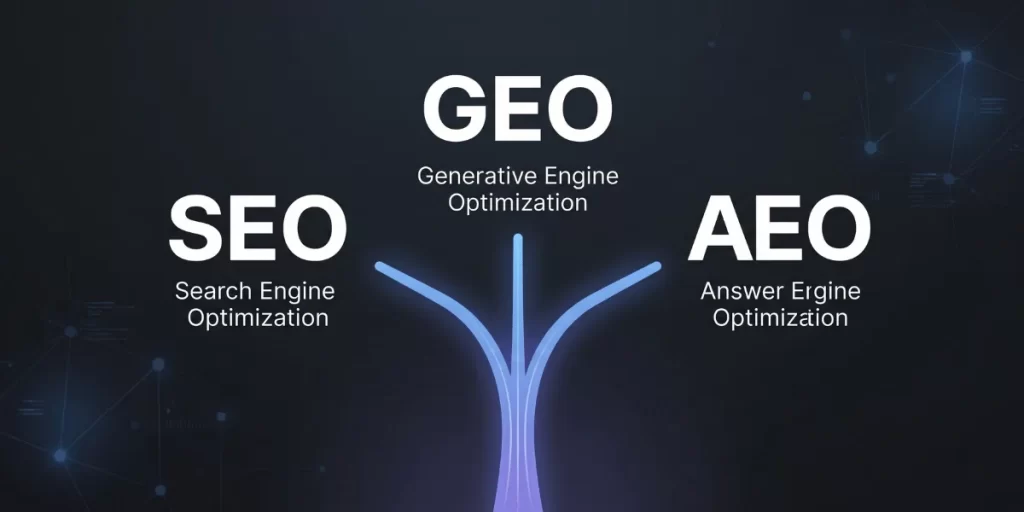
GEO stands for Generative Engine Optimisation. It refers to structuring and positioning content so that AI-generated search responses cite it. As AI Mode becomes the default experience for more queries, being authoritative and entity-rich enough for AI systems to reference is becoming as important as traditional ranking signals.
Further Reading
Primary News Sources
- CNN Business. (2026, May 19). Google search bar updates 2026. CNN. https://edition.cnn.com/2026/05/19/tech/google-search-bar-updates-2026
- New York Times. (2026, May 19). Google search bar AI Gemini. The New York Times. https://www.nytimes.com/2026/05/19/business/google-seach-bar-ai-gemini.html
- Time. (2026, May 20). Google shifts to AI search, heralding major change in how people use the internet. Time. https://time.com/article/2026/05/20/google-search-ai-internet/
Google I/O 2026 Coverage
- Schwartz, B. (2026, May 19). Google’s new intelligent search box: Its biggest change to the search box in 25 years. Search Engine Land. https://searchengineland.com/googles-new-intelligent-search-box-its-biggest-change-to-the-search-box-in-25-years-477968
- TechCrunch. (2026, May 19). Google Search as you know it is over. TechCrunch. https://techcrunch.com/2026/05/19/google-search-as-you-know-it-is-over/
- VentureBeat. (2026, May 19). Google just redesigned the search box for the first time in 25 years: Here’s why it matters more than you think. VentureBeat. https://venturebeat.com/ai/google-just-redesigned-the-search-box-for-the-first-time-in-25-years-heres-why-it-matters-more-than-you-think
- MWM. (2026, May 19). Google announces major AI overhaul for Search with information agents and dynamic interfaces. MWM. https://mwm.ai/articles/google-search-reimagined-with-ai-agents-and-generative-ui-in-may-2026
SEO Industry Analysis
- Coalition Technologies. (2026, May 20). Google I/O 2026 SEO: Search takeaways. Coalition Technologies. https://coalitiontechnologies.com/blog/google-io-2026-seo
- Launchcodex. (2026, May 20). Google I/O 2026: How the AI search update changes SEO visibility. Launchcodex. https://launchcodex.com/blog/seo-geo-ai/google-io-ai-search-seo-update/
- Search Engine Journal. (2025, October 28). Google AI Overviews impact on publishers and how to adapt into 2026. Search Engine Journal. https://www.searchenginejournal.com/impact-of-ai-overviews-how-publishers-need-to-adapt/556843/
About the Author

Ashan Kusalanka
SEO Consultant with 10+ years of experience helping local and global businesses strengthen their digital presence. I design strategies that improve visibility, build authority, and drive sustainable growth.